
Fuel injection is a computer-controlled method of delivering fuel to the engine in the proper amount. It is used by almost every modern production and racing vehicles, and requires much less maintenance than a carburetor (the old means of delivering fuel to the intake system).
There are a number of fuel injection designs which have various benefits and drawbacks. Some types are similar or even the same, but have different names under different manufacturers for marketing reasons.
- Direct Injection
- Electronic Fuel Injection
- Multi-Port Fuel Injection
- Sequential Fuel Injection
- Throttle Body Injection
- Tuned Port Injection
Types of Fuel Injection
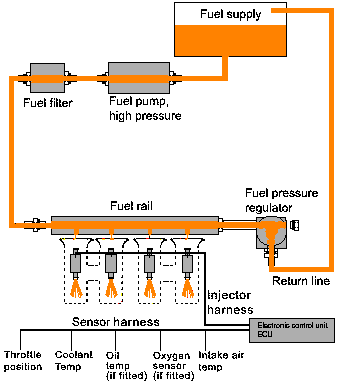
Electronic Fuel Injection
Electronic fuel injection (EFI) is an extended name for the standard version of fuel injection, as opposed to the uncommon mechanical fuel injection. Early fuel injection systems sometimes had a mechanical set-up, and the electronic design was more effective, and therefore marketed.
The electronic system allows for more complex variations of fuel injection, such as Sequential and Direct Injection. It also increases the precision of the amount of fuel sprayed, which is better for emissions.
EFI systems are controlled by the ECU, which gets its information from various sensors around the engine, mostly on the intake and exhaust.
Why New Cars Are Using Both Direct & Port Fuel Injection
- Fuel Injectors
- Fuel Pressure Regulators
- Fuel Calculations
- Sequential Fuel Injection
- Fuel Pump
- Gasoline
- Fuel Filter